Man with van in Chiswick for home, office and item moves

We provide man with van support in Chiswick for practical moving work that needs careful handling rather than a large lorry and a long, complicated set-up. The service suits household items, small moves, single bulky pieces and straightforward local transport where a nimble vehicle and hands-on loading help keep the day organised. If you are comparing options, start with the type of load, the access at each property and the level of help you want with lifting.
The service is built around moving furniture, boxes and mixed belongings in a way that feels manageable from collection to delivery. For wider house or flat removals, our house removals page explains the kind of domestic work we handle, while the man with van page is useful if you want to explore the core service in more general terms. Use the main service for journeys that do not need a full-scale removals operation but still deserve orderly loading, secure transit and a careful hand at both ends.
To request a quotation, it helps to have a clear list of the items, the pickup and delivery postcodes, any stairs, and whether the move includes dismantling, wrapping or waiting time. Simple detail makes pricing easier to shape because the right van size and labour can be matched to the job rather than guessed. If you already know the likely date, mention that too when you ask for your quote.
Domestic moves and small household transport
A man with van arrangement is often the right fit for compact domestic jobs in Chiswick where the main need is sensible moving help, not a large removals crew. That can include a few rooms’ worth of belongings, a student move, a downsizing job or the transport of boxed contents between homes. The useful part is often the combination of vehicle space and physical assistance, especially when items need to be carried from upper floors, tight hallways or shared entrances.
Domestic work is rarely only about distance. The shape of the furniture, the route through the property and the order in which items should be loaded can all affect the outcome. If you are moving sofas, beds, wardrobes or kitchen units, it is worth saying so early, because larger items may need to be moved in a particular sequence. For a broader domestic service overview, our home moves page gives another route into the same type of household transport.
When the load is mixed, a clear moving plan makes the job easier to organise. One of the simplest ways to prepare is to separate items by room and identify anything fragile, awkward or especially heavy. Not every move needs a full removals specification, but the more precise the description, the easier it is to match the service to the practical work required.
Furniture, boxes and single items
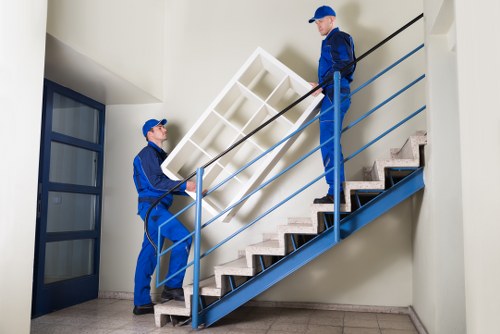
Many customers use a man with van service for furniture pick-up, marketplace collections or a single piece that is too large for a car. That might be a dining table, a sofa, a desk, a chest of drawers or a bed frame. Because the work is focused, the move can often be planned around the item itself: its size, whether it separates into pieces, and whether it needs two-person lifting or careful protection in transit. Our furniture pick-up page is relevant if your job is centred on collecting and delivering purchased or relocated items.
Boxes and loose items also travel well when they are packed in a logical way. Sturdy cartons, labelled bags and clearly grouped pieces help reduce delay at the van and make unloading more orderly. For some customers, the question is not just how much fits in the vehicle but whether the loading process can be done efficiently without rushed handling. That is where a practical moving service can be more useful than simply hiring a van alone.
It also helps to think about access at each end. Narrow stairwells, parking distance and awkward doorways can influence how long the job takes and how much handling is involved. If an item needs to be wrapped, broken down or protected from rubbing against other belongings, mention that when you ask for a quotation. That gives room for the move to be set up properly rather than treated as a one-size-fits-all collection.
Household removals and delivery support
Not every customer needs a full house move, but many still need more than a simple courier run. A man with van service can bridge that gap by covering part-load removals, local delivery support and the transport of awkward household goods. If you are comparing how a job might be described, our house movers page gives another way to look at domestic moving work, while the house removalists page sits alongside it for customers who want a broader removals perspective.
The practical value lies in flexibility. A load may include furniture, boxes, bags, home contents from storage or a combination of all four. The service can be shaped around a specific task such as taking items from a flat to a house, moving furniture to a second address or helping with a partial relocation where only selected rooms are involved. When a move is split into stages, it is important to say which items travel first and whether anything stays behind.
If you are unsure whether a job counts as a small move or a larger removal, list the contents in plain terms and let the scope be assessed from the facts. That keeps the conversation focused on the actual work rather than on labels. For many people, clarity about the load matters more than the name of the service, because the best quotation comes from a realistic picture of what needs carrying.
Office relocation and commercial transport
We also support smaller business moves and light commercial transport in Chiswick where a compact van service is enough to move equipment, files, furniture or stock between locations. The work may involve a single office, a studio, a back-office space or a short relocation from one business address to another. For a more dedicated commercial overview, our commercial moves page is a useful reference point, and the office removals page covers office-based moving work in greater detail.
Commercial jobs often benefit from careful timing and sensible sequencing. Desks, chairs, printers, archive boxes and display items may need to be loaded in a particular order so that unloading is smoother at the destination. If a business move includes multiple stops, the order of those stops should be stated clearly. That allows the move to be arranged around the route rather than forcing the route to fit the load at the last minute.
There may also be practical limitations that shape the job, such as lift use, loading bay access or the need to move items outside normal working hours. Those details are not complications to hide; they are part of a workable specification. A good quotation depends on how the move is actually carried out, not just on the number of boxes involved.
Where the service fits and how the vehicle is used

The right van choice matters because the load space has to suit both the volume and the shape of the items. A compact move can be straightforward with a smaller vehicle, while long furniture, mixed household goods or business equipment may need more room and better arrangement inside the van. Our moving van page is useful if you want to consider the vehicle side of the service, and moving truck may suit people comparing larger transport options for bigger loads.
Efficient loading is about more than filling space. Heavier items are usually placed with care so they travel securely, and more delicate belongings are positioned where they are less likely to shift. When a load contains a mixture of weights and sizes, the order of loading and unloading can make a noticeable difference to how smoothly the move goes. That is especially true when the collection point or delivery point has limited room to manoeuvre.
Some customers only need help moving goods from one address to another, while others need loading support as well as transport and unloading. It is worth being precise about the level of assistance required, because that influences the manpower and time needed. If you are planning around a specific day, make sure the access details are ready before you ask for a quote so the estimate reflects the real scale of the work.
How to prepare a quotation request
One clear paragraph of information usually helps most: what needs moving, where it is going, and what makes the job awkward or straightforward. Include a rough inventory, room count or item list if you have one, and say whether packing, dismantling or reassembly is part of the work. If there are stairs, parking limits or storage collections involved, those details should be mentioned too, as they can affect the effort and timing.
The quotation process is easier when there is no ambiguity about access. For example, tell us whether there is a lift, whether entry is from street level or a shared hallway, and whether there are any items that need special handling because of size or fragility. Accurate access notes help the service be planned sensibly rather than estimated on assumptions. If you have photos, they can be helpful, but a written description is still the main starting point.
When you ask for a quote, keep the focus on the move itself rather than on general background. That means the number of rooms, the nature of the items and the destination matter more than a long explanation. If a collection time has to fit around other arrangements, mention that in the same message so the response can take the whole job into account. A concise, factual enquiry usually produces the most useful estimate.
About Chiswick
Chiswick is a district in west London, on the north bank of the River Thames within the London Borough of Hounslow. Historically it developed as a riverside settlement on the route between central London and the west, and over time it became known for a mix of villas, terraces and older village-scale streets alongside later commercial corridors. The area includes a stretch of the Thames Path, which gives walkers long views along the river and links Chiswick with neighbouring riverside districts. Chiswick Mall, close to the water, is one of the best-known historic streets, while the larger district also extends inland to places such as Turnham Green and Gunnersbury. The townscape is shaped by a layered pattern of domestic architecture, small centres and open spaces rather than by one single grid or civic core. Chiswick House and its gardens are among the district’s most familiar landmarks, reflecting the area’s association with 18th-century design and landscape. The wider locality also has parks and green spaces, including Dukes Meadows, which gives the riverside a more open character and provides recreational ground near the Thames. Transport links, historic villas, local shopping streets and the proximity to central west London all contribute to Chiswick’s distinctive identity as a place that feels both urban and comparatively green.
Service options for different moving tasks
Because no two jobs are exactly alike, it helps to think in terms of service options rather than assuming a fixed package. Some customers need an uplift from one address and delivery to another; others need help collecting an item from a retailer, storage unit or private seller. There are also cases where the move is about replacing one room’s furniture, not relocating a whole home. Our man and van removals page and man with van removal page give more context for those narrower removal-style tasks.
For people comparing wording, it is useful to distinguish between transport-only work and a fuller moving service. Transport-only can suit simple collections, while moving support is more appropriate when there is lifting, carrying, loading and unloading to consider. If a job includes many small items, the packing arrangement may matter more than the mileage. If it involves one or two large pieces, dimensions and handling are likely to be the key factors instead.
That is why a quotation should reflect the nature of the work, not just the destination. Two moves over the same distance can differ significantly if one is an easy ground-floor collection and the other involves multiple flights of stairs, heavy furniture and a time window for access. The aim is a practical plan that matches the actual load and the actual route.
Moving help for larger or more specialised loads

Some jobs sit between a standard van move and a more involved removals project. That may include mixed contents from a flat, office equipment, bulky household items or a combination of furniture and boxed goods. If you need to compare broader service wording, the movers page and the removal services page can help show how the work is grouped across different kinds of moving support.
When the load includes larger or awkward pieces, it is sensible to think about protection as well as transport. Blankets, wrapping, edge protection and careful stacking can all reduce the chance of surface damage during transit. Some items are straightforward if they remain upright, while others travel more safely when removed or separated into components. The exact method depends on the item rather than on a fixed rule.
Inquiries are easier to assess when they mention any special features of the job, such as unusually long pieces, fragile surfaces or goods that must be moved in a specific order. That is not about making the process complicated; it is about preventing avoidable surprises. If you want the move to feel controlled from the outset, give the practical details upfront and let the service be matched to them.
Helpful details that make the move smoother
If your move is likely to involve multiple containers, a short list can be useful: furniture, boxes, bags, appliances and any items requiring disassembly. That gives the quotation a better basis than a vague estimate such as “a few thingsâ€. It also helps to know whether everything is going from one place to another in a single trip or whether the collection is spread across more than one location. For some customers, a short sequence of stops is normal; for others, it is not.
When you are ready to proceed, the final step is simply to ask for a quotation with the details that matter most. If your move includes mixed items, state the largest pieces first and then note the smaller items underneath. If the work is time-sensitive, say so without turning the request into a long narrative. pricing and quotes is a useful page if you want to see how estimates are approached before you send your enquiry, and contact us is the natural place to make that final request.
We recommend keeping the request direct: what is moving, where it starts, where it ends and what help is needed on the day. That gives room for an accurate response and avoids overcomplicating the first conversation. Request your quotation when you are ready, and include the practical details that will shape the job.